The Alka is run in remembrance of the siege of Sinj in August 1715. An Ottoman army of at least 40,000 soldiers, led by Mehmed-pasha Čelić, attacked the town continuously for eight days. It was defended by about 700 soldiers and a few hundred civilians — days of cannon fire, assaults, and prayers.
On the feast of the Assumption, the Ottomans unexpectedly withdrew. The people of Sinj attributed the victory to the intercession of Our Lady of Sinj — and in her honor they began running the Alka. More than three centuries later, the game is still run in the same place, by nearly the same rules, with the same chivalric spirit.
The Sinj Alka is the only chivalric competition of its kind in Europe that has been preserved and continuously held. Since 2010, it has been protected on UNESCO's List of Intangible Cultural Heritage of Humanity.
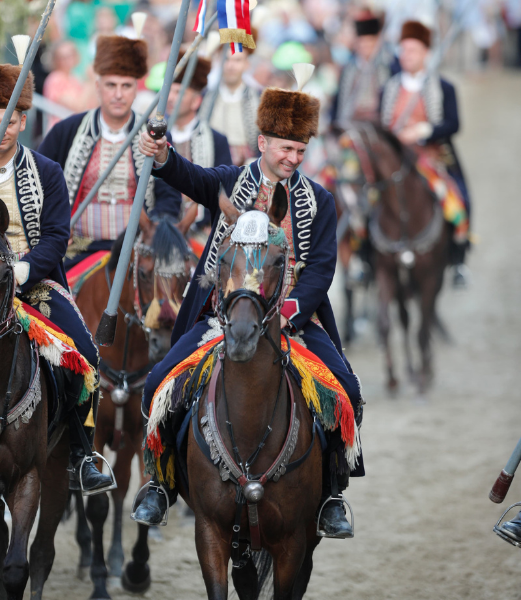
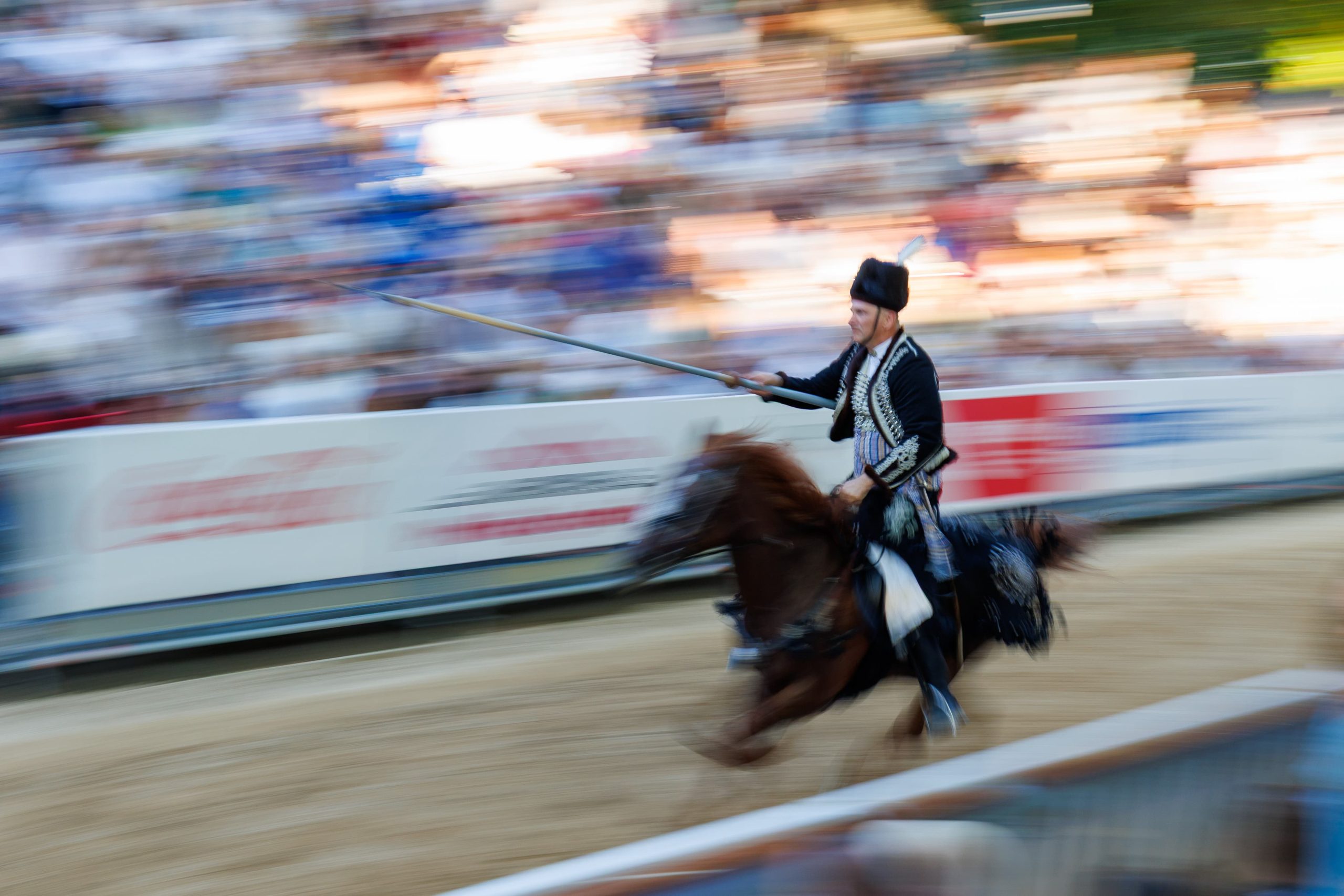
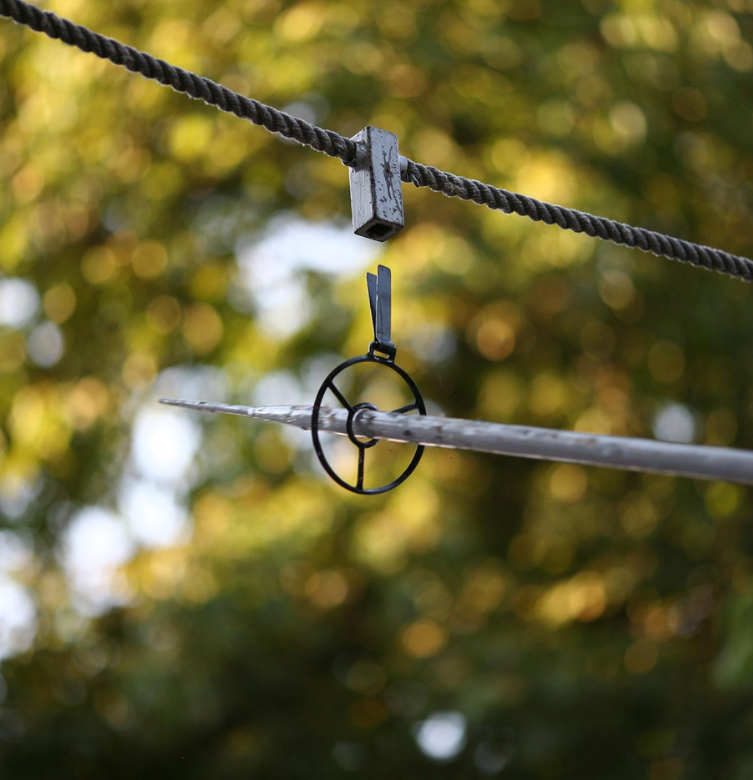
An alkar at full gallop rides 160 meters — deep in the saddle, feet in the stirrups — and with a lance up to 300 centimeters long aims at the alka: an iron ring barely 131.7 millimeters in diameter, mounted at a height of 332 centimeters. The alka is divided into four fields. A hit in the center scores three points, the upper field two, and each of the two lower fields one. Three runs are held. The alkar with the most points becomes the champion.
If two or more alkars have an equal number of points after three runs, a tiebreaker follows — additional runs until a winner is determined. At the end of the competition, the duke proclaims the champion and places a small flame of the Croatian tricolor on his lance. The champion then carries the flame through the town on his lance, and the people of Sinj celebrate him all year long.
Alkars traditionally grow mustaches — as a sign of connection to their ancestors who defended the town. Horses are bred at the Alkar stud farm, while uniforms, weapons, and equipment are made and restored by local craftsmen. Participating in the Alka is not merely an athletic act — it is a vow to the community and an identity passed down from generation to generation.
Three centuries, the same town, the same racecourse, the same chivalric spirit — the Alka is not a memory of the past, it is the living vow of a region.
Alkars and alkar squires who take part in the alkar procession and competition are chosen exclusively from among members of the Society who were born in the Cetina region, as well as those whose parents are native to it. At least 11 and at most 17 alkars take part in the competition. The entire community participates in the preparations — the Alka is not an event, but a way of life.
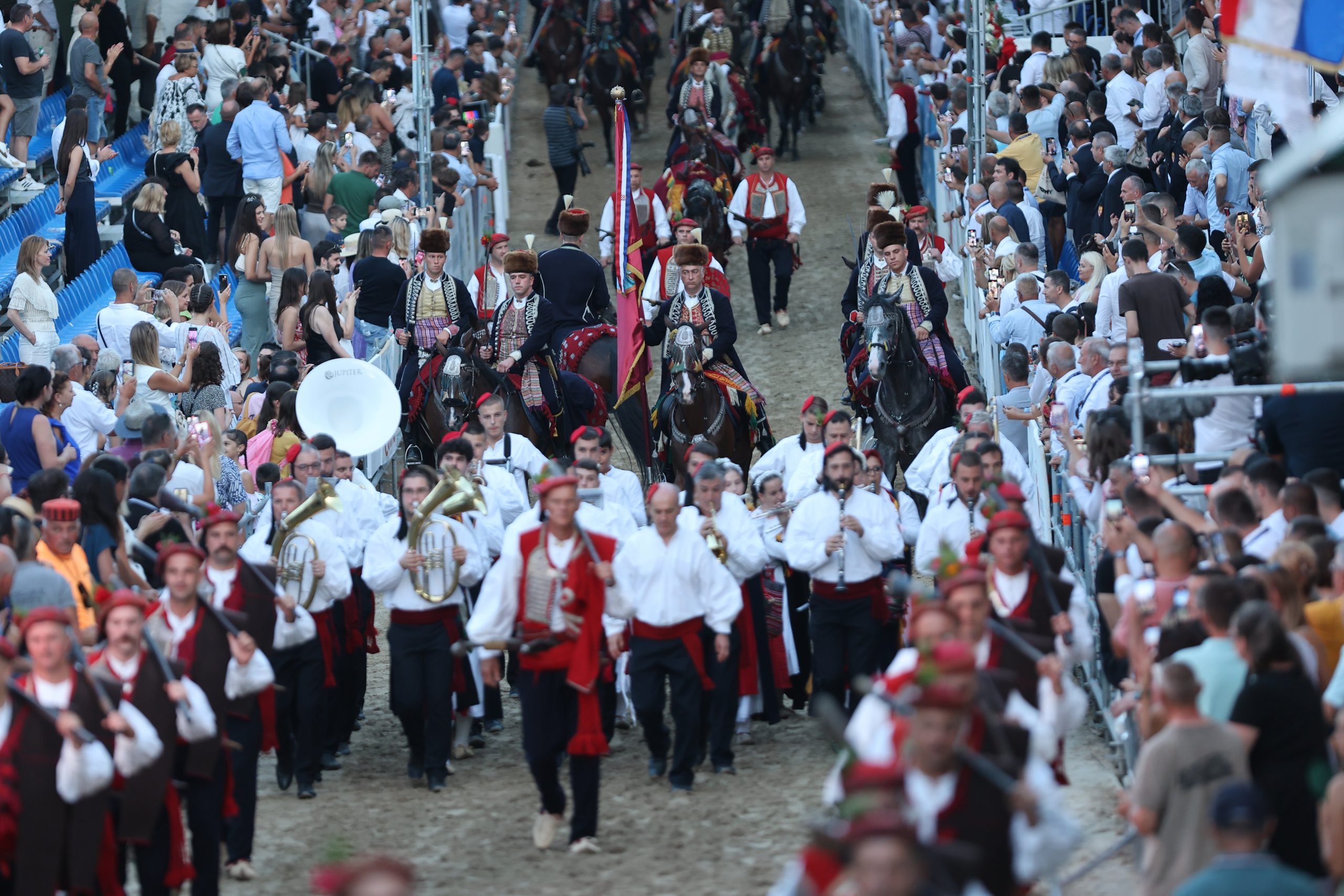
The festivities last three days — Bara on Friday, Čoja on Saturday, Alka on Sunday. The champion carries a small flame of the Croatian tricolor through the town on his lance, and the people of Sinj celebrate him all year long.
The oldest preserved written rules of the Sinj Alka date back to 1833, though its roots reach much deeper into the past. In more than three hundred years of its existence, the Alka festivities have been attended by two emperors, four kings, and nine heads of state. But its true guardians have always been the people of Sinj — those who preserve and pass on the Alka as a measure of honor, integrity, and belonging.